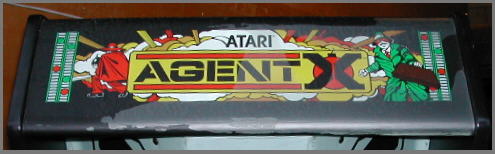
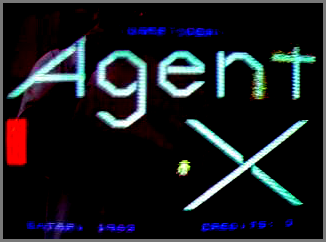
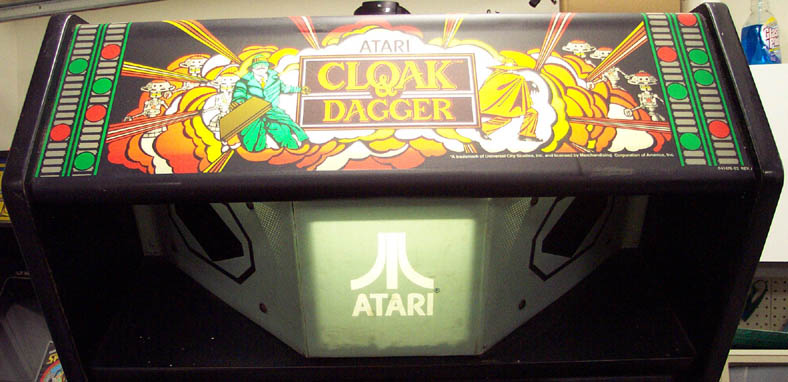
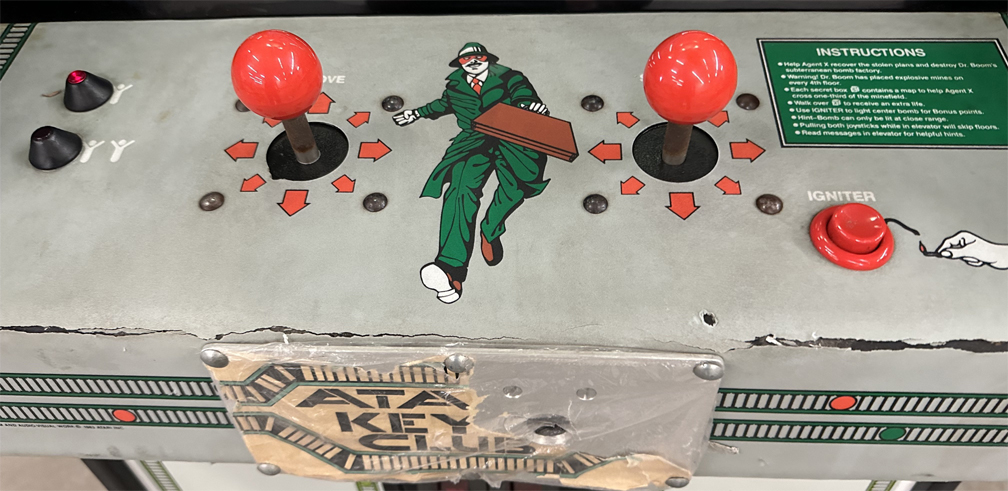
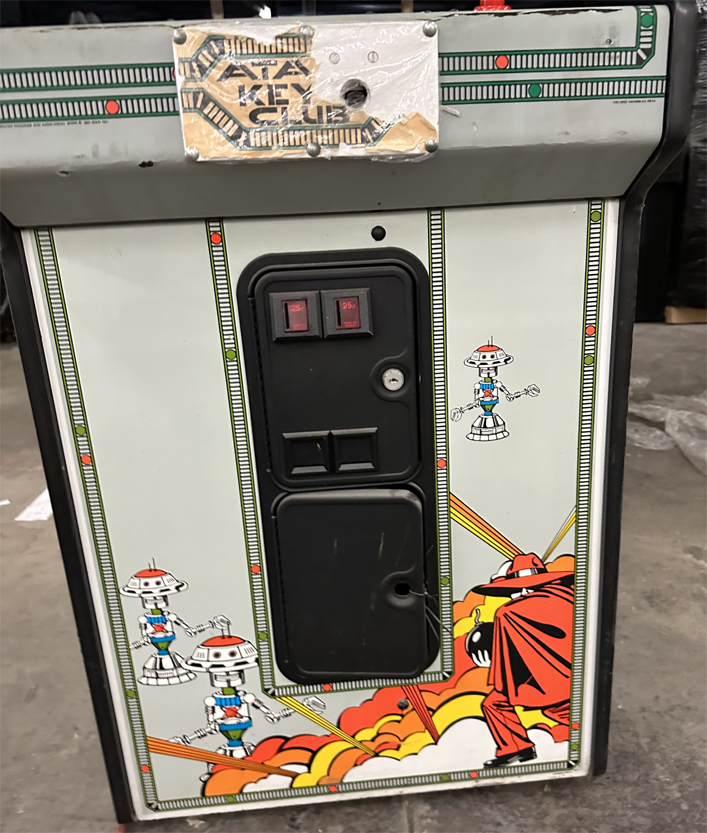
Agent X / Cloak & Dagger
From programmer Russel "Rusty" Dawe regarding the production of the prototype cabs:
|
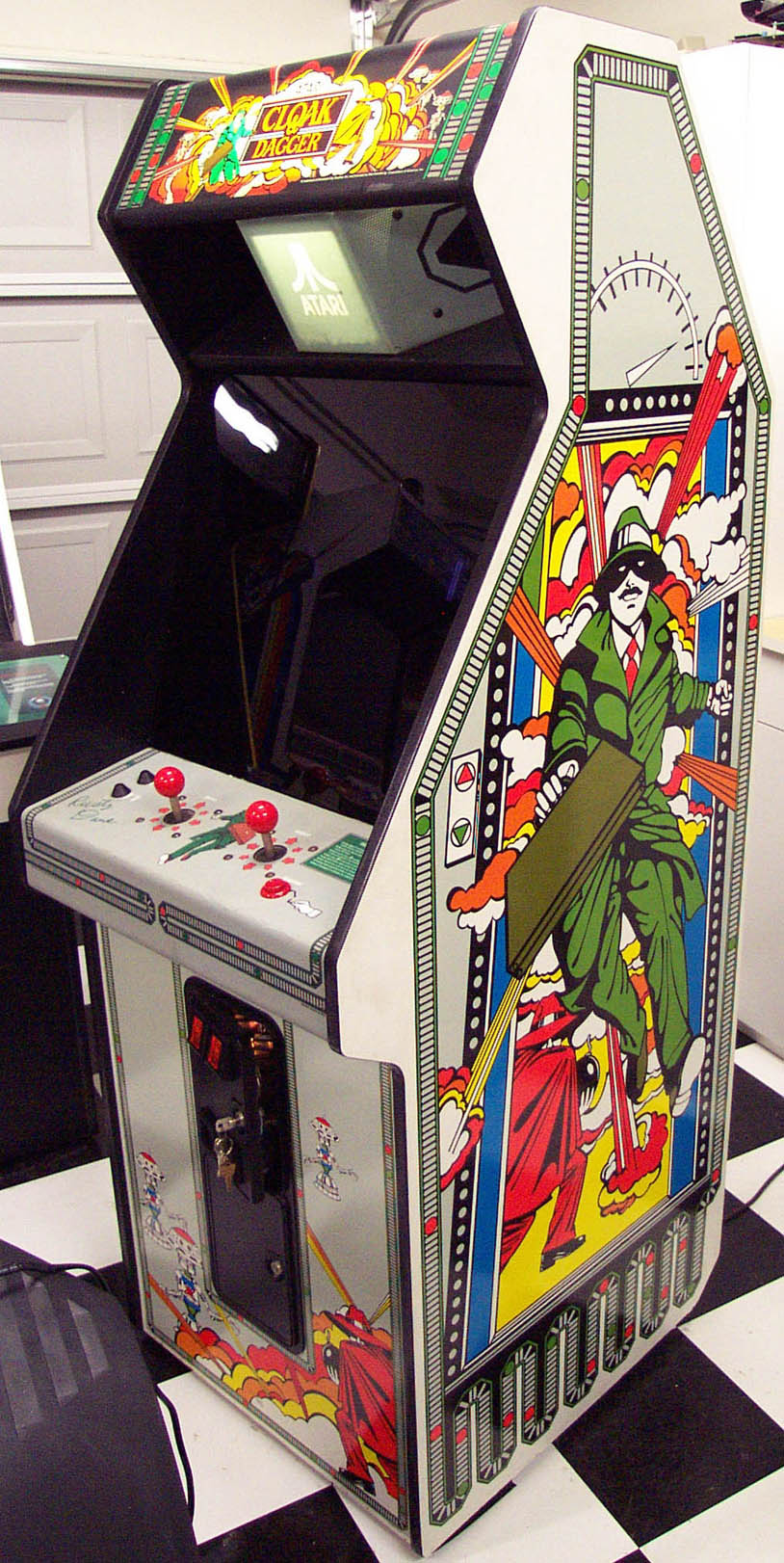
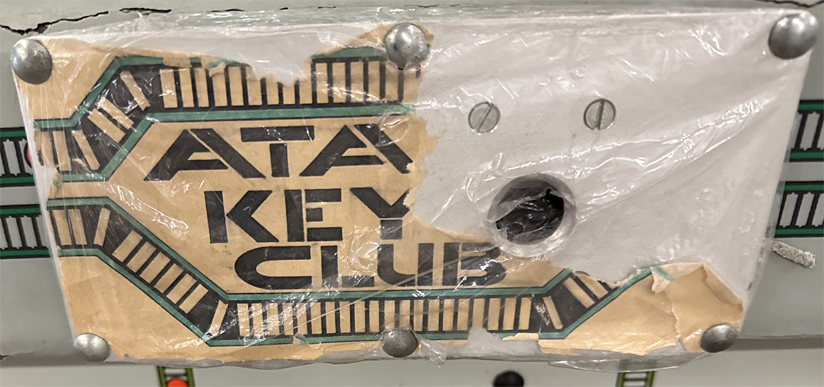
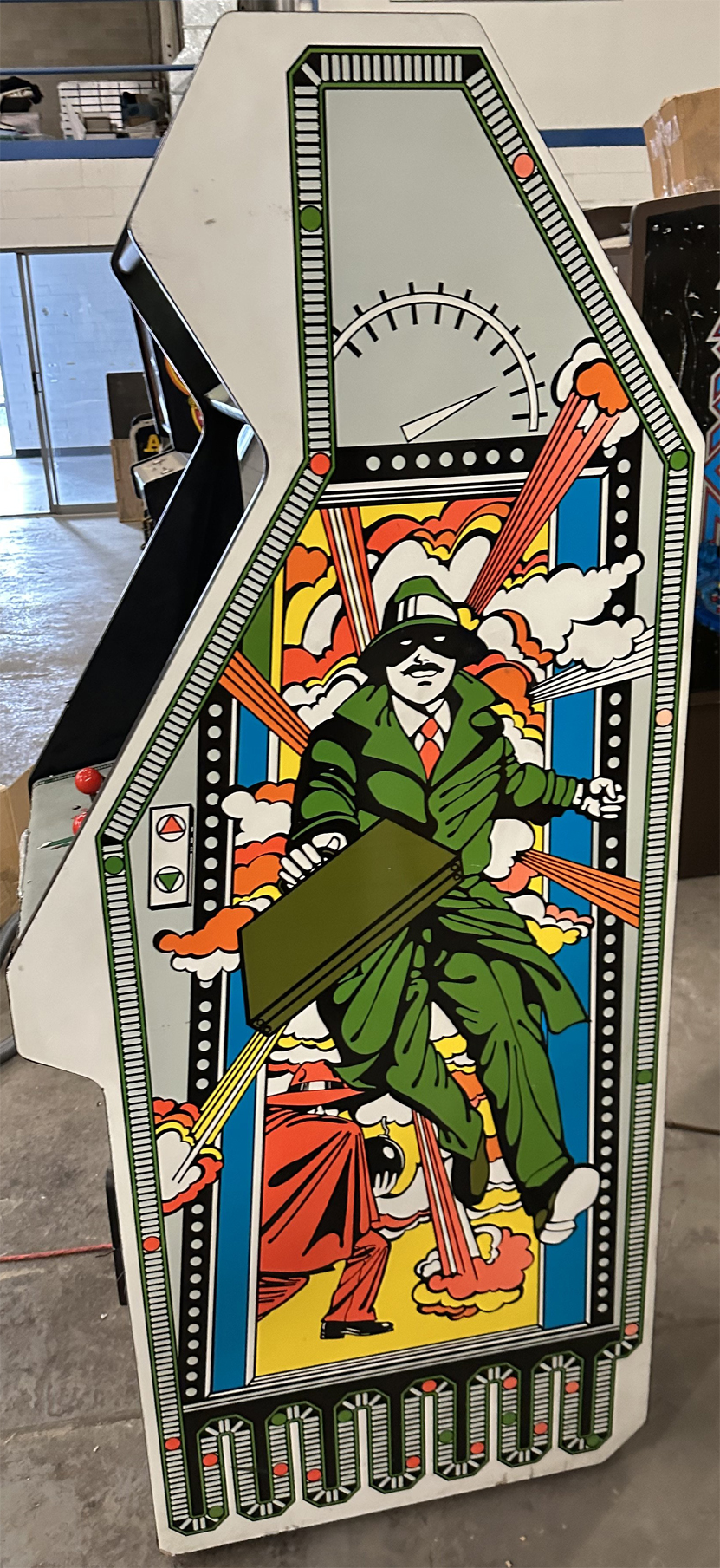
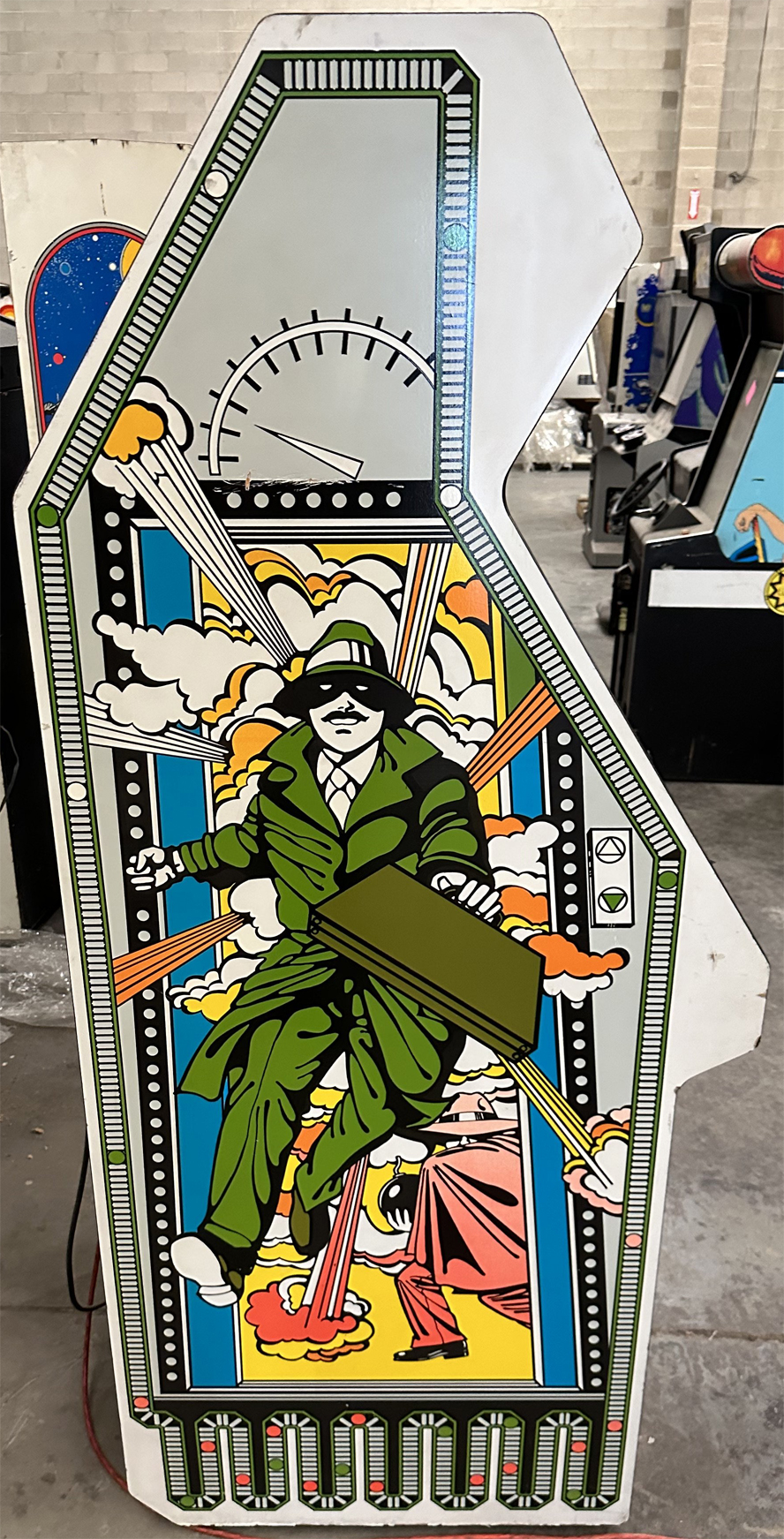
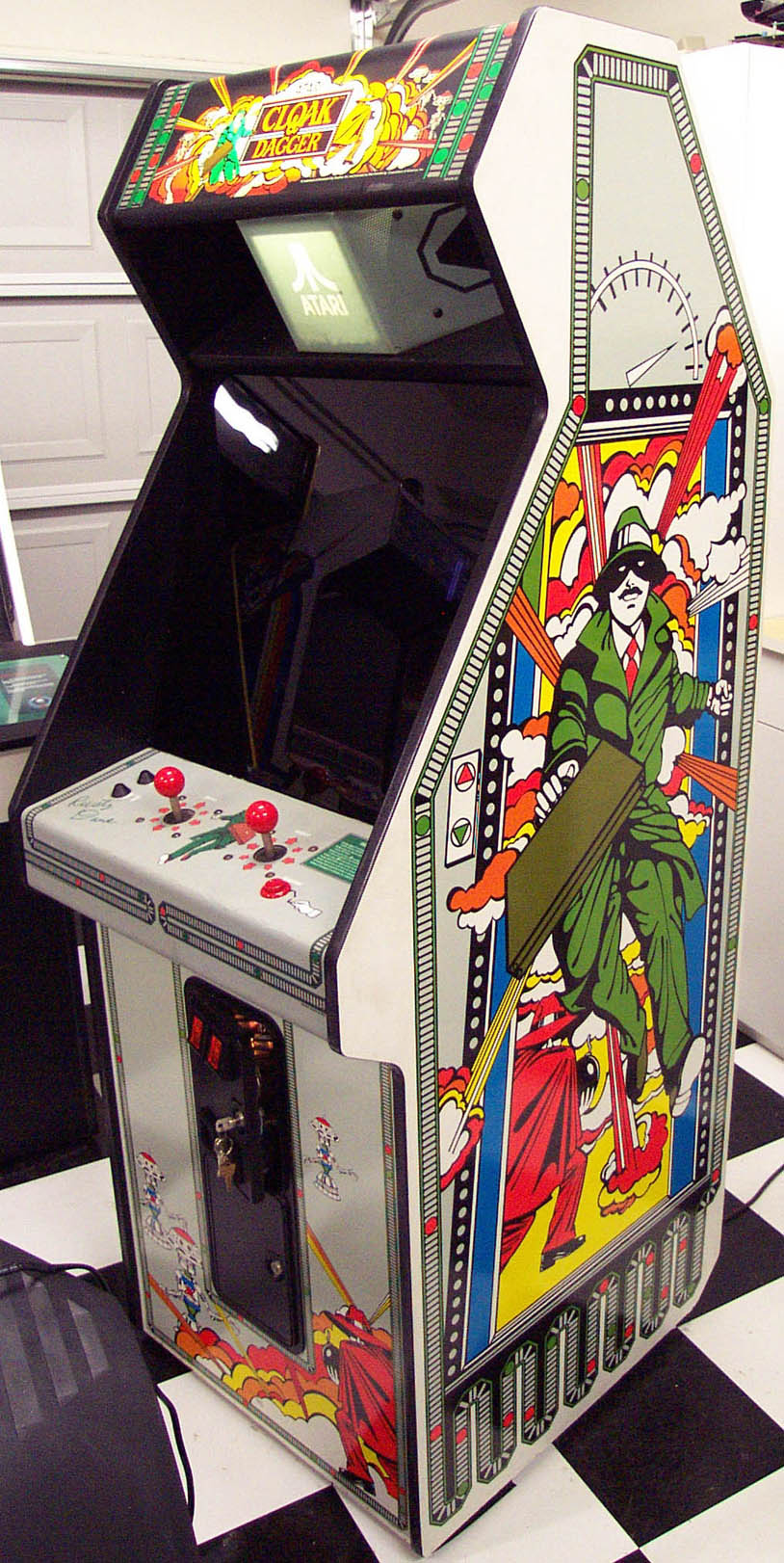
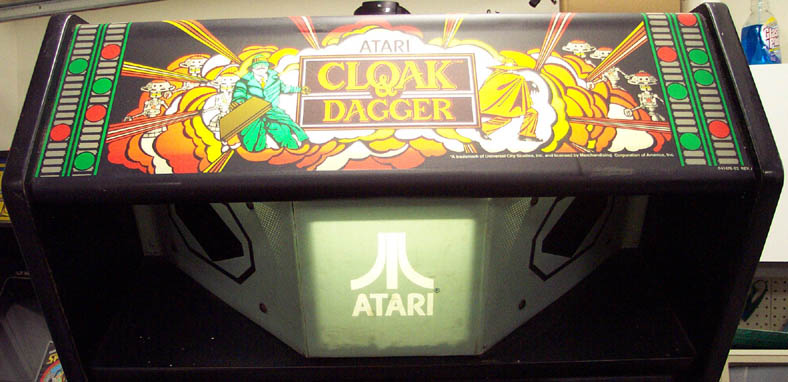
"I worked with George Opperman on several titles including C&D. He really had an eye for color and style. He left his mark on almost all the early Atari arcade titles. Atari would run off these printouts on these monstrous decals that were the size of the cabinet. They were hand-drawn and colored by our art staff, like all the other artwork. However, they were going for a certain 'style' that made it look that way. Solid colors, blocked shapes, etc. The Crystal Castles cab worked, and besides, we were only doing a pre-prod run of 20. So, we used what was on hand. The Atari Key Club was a concept that never came to be. That was marketing’s idea to try to get repeat play. C&D was a game that they felt it could be applied to that was currently approaching production, so we fixed up one cabinet with it to give it a try. It was basically a flash PROM stick. It could hold a whopping 1k of memory (or was that 256 bytes). Either way, it showed promise, but not for a game like C&D so much. It would have been better tested on a role-playing type game, or something that you really needed multiple sessions on to complete. The player would buy it and bring it with them, and plug it into the front of the game. It allowed the player to save their current state of the game. Atari gave away a bunch of keys to players at that arcade (Ed.: At Atari Adventure arcades); about 1 in 10 actually used it. Gauntlet or any adventure based game would have been good. Even Tempest could have used it! It cost about $30 for the reader and about $3 per key; today it’d be about $10 for the reader and pennies for the key. Atari was planning to let the individual arcade owners sell/give away the keys. That (price) was 'in bulk'. The test reader we used was close to $100; keys were about $3.75." |