Atari Falcon 030 Microbox
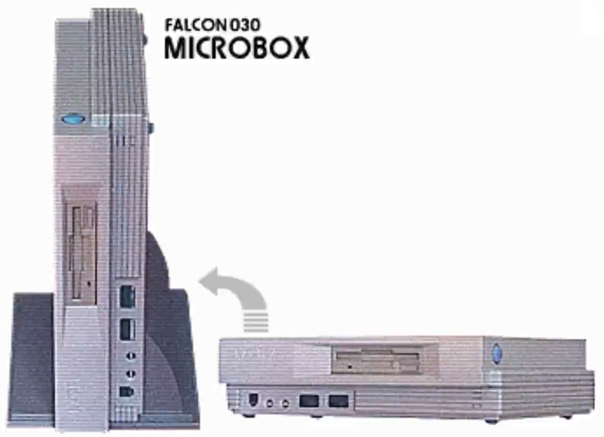
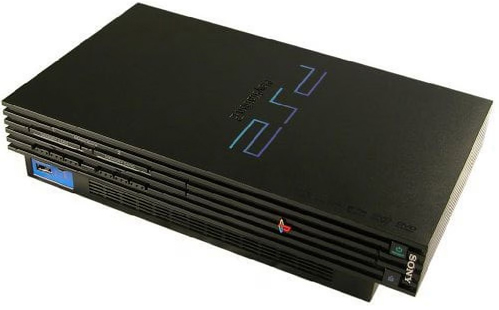
Atari created a number of prototypes of the Falcon040 (based on the more capable fully pipelined, integrated-FPU, Motorola 68040, and using a "microbox" case), but canceled it. The Microbox apparently came incredibly close to being released. It was a black box about the size of a Midi hi-fi system, designed by the creators of Apple's Performa. The case resembled Sony PlayStation 2, right down to the ability to run it vertically or horizontally. Sony purchased the case design from Atari; it's even referenced in the PS2 patent applications. The front face featured a stacked CD-ROM drive, a floppy drive, and the hard drive. It also housed the keyboard and joystick ports, as well as audio inputs and outputs in the form of mini-jacks. On the back, however, there were also RCA input and output jacks to connect it to a stereo system. The 68030 was clocked at 16 MHz, but the buses were true 32-bit. It featured the 3 direct access buses (one master and two slaves) to the 68030 from the FALCON 040, as well as the PC-style keyboard for obvious economic reasons. The graphics card was simply that of the JAGUAR. You could add optional expansion cards via the cartridge port, LAN, MIDI ports, as well as serial, parallel, and DSP ports. The most surprising thing about this device was that it used no screws. Its cover flipped open by pressing two buttons. Its appearance was so discreet that at every press conference, Jack Tramiel would place it on his desk without anyone noticing. When his audience later found out they had been inches away from the Microbox, they couldn't believe how unassuming its presence was.
This time, it was the delays of the Jaguar that prevented it from being commercialized, even though its manufacturing was already planned. That being said, we can already see Atari's computing direction according to Jack Tramiel's vision. At that point, it was obvious to him that Atari's future in computing relied on a completely new concept. To fight against the PC world driven by Intel processors, a new computer concept had to be invented.